

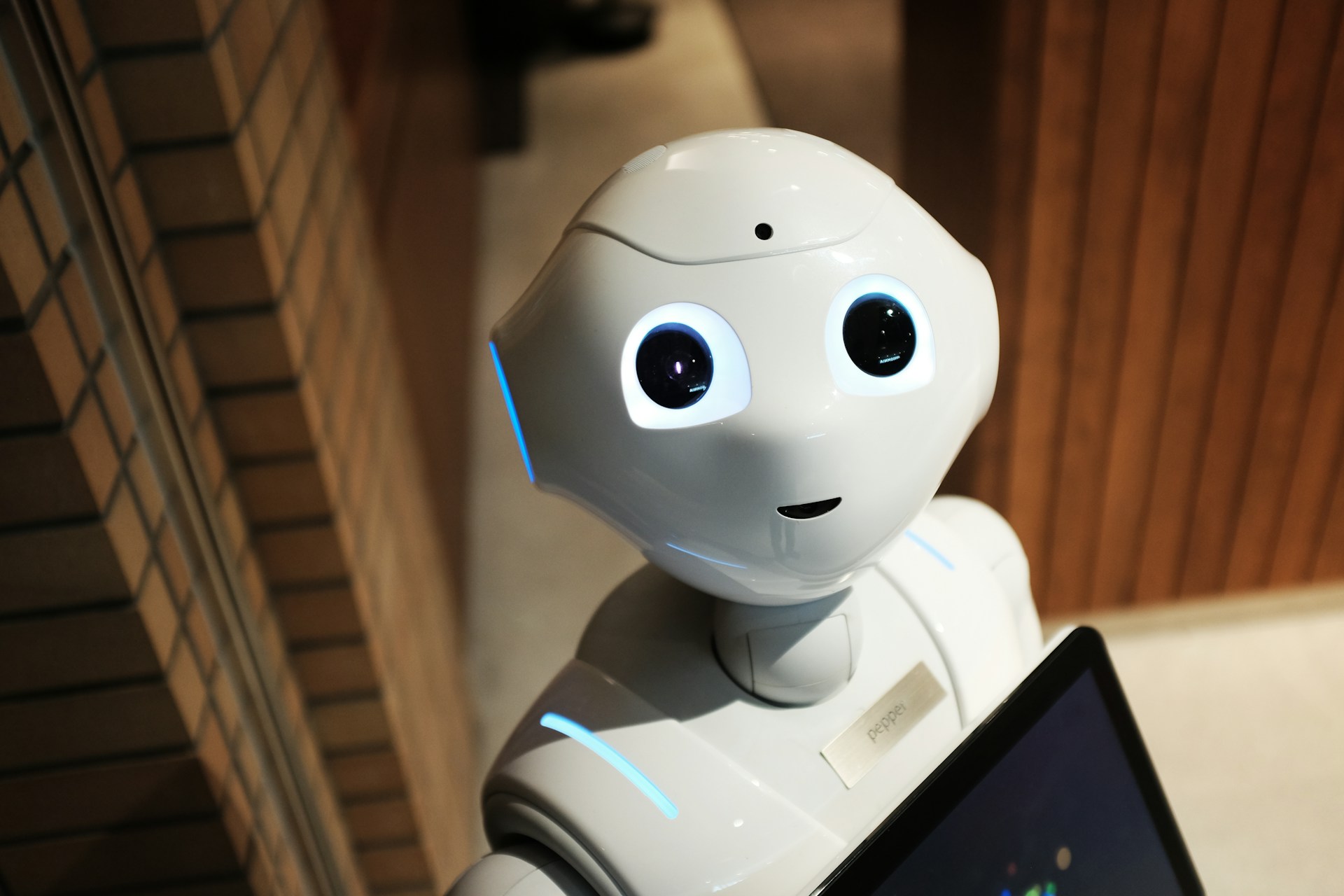
Imagine arriving home after a long day and finding that your laundry has been sorted, your kitchen has been organized, and a few household tasks have already been completed. Instead of controlling everything through a smartphone, you simply tell a robot what you need, and it attempts to do the work for you.
Not long ago, this idea belonged mostly to science fiction. Today, advances in artificial intelligence, robotics, computer vision, and motion control are bringing parts of that vision closer to reality.
As we approach 2027, humanoid robots are attracting growing attention from technology companies, researchers, and investors. Unlike traditional industrial robots designed for one specific task, humanoid machines are being developed to operate in environments built for people. They may eventually navigate workplaces, handle objects, transport supplies, and assist with repetitive physical activities.
The excitement is not just about creating machines that look human. It is about giving computers a physical presence and the ability to interact with the world around them.
However, there is an important distinction between what these robots can demonstrate today and what they may realistically achieve in the near future. The technology is advancing quickly, but reliable, affordable, general-purpose humanoid robots are still a work in progress.
1. What Exactly Is a Humanoid Robot?
A humanoid robot is a machine designed with a body structure that resembles the human form. It typically has a torso, two arms, two legs, and a head or sensor assembly. Some models use hands with multiple fingers, while others rely on simpler grippers.
The human-like design has a practical advantage. Our homes, offices, warehouses, and public buildings are already designed around human movement. Door handles, staircases, shelves, workstations, and tools generally assume that someone will operate them using a human body.
A robot with a compatible physical structure could potentially work in these environments without requiring every space to be redesigned.
What makes the latest generation particularly interesting is the integration of artificial intelligence. Traditional robots usually follow carefully programmed instructions in controlled settings. AI-powered robots are being developed to interpret visual information, understand commands, recognize objects, and adjust their actions when conditions change.
For example, rather than moving an object along one fixed route, an intelligent robot might identify the object, determine where it belongs, and plan a sequence of movements to place it there.
That does not mean every robot can independently understand any command or perform every task. Its capabilities depend on its software, sensors, training, hardware, and operating environment.
2. Why Is 2027 Becoming an Important Year for Humanoid Robotics?
The growing interest in 2027 comes from several technologies developing at the same time.
First, generative AI has improved how computers interpret language and process information. Second, advances in computer vision help machines identify objects and understand their surroundings. Third, better sensors, motors, batteries, and control systems are helping engineers build more capable physical machines.
These developments are beginning to connect artificial intelligence with robotics in ways that could support more flexible applications.
Industry research firm Omdia has identified Physical AI as one of the forces expected to shape technology in 2027. This broader category includes intelligent systems that interact with the physical world, from robots to other AI-enabled machines. https://omdia.tech.informa.com/pr/2026/sep/omdia-identifies-four-forces-set-to-reshape-technology-in-2027
The important point is that 2027 should not be viewed as a guaranteed date when humanoid robots suddenly become common in every household. Instead, it may be a significant period for testing, improving, and expanding commercial deployments.
Some businesses may adopt these machines for carefully defined jobs before consumers can realistically afford them.
3. How AI Gives Robots a Better Understanding of Their Environment
A robot needs more than mechanical strength to perform useful work. It must also collect information, interpret what is happening, and choose an appropriate response.
This is where artificial intelligence becomes important.
Cameras and other sensors provide information about nearby objects, surfaces, obstacles, and movement. AI models can help interpret that information, while planning systems determine how the robot should respond.
Consider a simple task: picking up a bottle from a table.
The robot must locate the bottle, estimate its position, identify a suitable gripping point, move its arm without hitting nearby objects, apply an appropriate amount of force, and maintain its balance if necessary.
Each step introduces a potential problem. A bottle might be slippery, partly hidden, or positioned differently than expected.
AI can help a robot respond to unfamiliar situations, but physical interaction remains difficult. A system that performs well in a demonstration may still struggle with objects it has never encountered or conditions that differ from its training.
This is one reason researchers are working on better robot learning, simulation environments, and models that connect perception with action.
4. The Workplace Could Be the First Major Market
Although household robots receive plenty of attention, workplaces may offer a more practical starting point for humanoid technology.
Factories and warehouses often contain repetitive tasks that require physical movement but do not always demand complex decision-making. Examples include transporting items, moving containers, handling selected components, and assisting with material organization.
Humanoid robots could be useful in certain environments because they may operate around equipment and workstations already designed for humans.
Companies developing these machines are exploring industrial applications, while investors are paying increasing attention to the robotics supply chain. However, the economic value will depend on whether robots can complete tasks safely, consistently, and at a competitive cost.
A robot that performs a task correctly only under ideal conditions may not be useful enough for a busy warehouse.
Businesses will also need to consider maintenance, battery charging, employee training, software updates, safety procedures, and downtime.
For this reason, the earliest successful deployments may focus on a narrow range of activities rather than replacing entire teams of workers.
5. Could Humanoid Robots Become Home Assistants?
The idea of a robot helping around the house is one of the most appealing possibilities associated with this technology.
A capable home assistant might eventually help carry groceries, collect laundry, organize selected items, or retrieve objects from different rooms. It could also provide simple reminders and respond to spoken instructions.
For older adults and people with limited mobility, carefully designed robotic assistance could offer additional convenience and support.
But a home is a much more complicated environment than it might appear.
Everyday spaces contain pets, children, fragile objects, slippery floors, narrow passages, and unexpected obstacles. Household tasks also require a wide variety of movements and judgments.
Folding different types of clothing, cleaning a spill, handling a hot pan, or putting away groceries are not equally easy problems. Each task presents different challenges involving object recognition, dexterity, safety, and decision-making.
Cost is another major obstacle. A household robot must offer enough practical value to justify its purchase price, maintenance expenses, and electricity consumption.
By 2027, consumers may see more demonstrations, limited commercial offerings, and improved prototypes. However, it would be premature to assume that affordable robots capable of managing an entire home independently will become widely available.
6. Healthcare and Elderly Care: An Area Worth Watching
Healthcare is another field where robotics could provide meaningful assistance.
Hospitals and care facilities involve many physical activities, including transporting supplies, moving equipment, delivering items, and supporting routine operations. Robots could potentially help with some of these tasks, allowing staff to devote more time to patients.
In elderly care, future robotic systems might assist with retrieving everyday objects, providing reminders, or helping people communicate with caregivers.
Nevertheless, assisting a vulnerable person is very different from moving a box in a warehouse.
A robot operating around patients must respond safely to unpredictable movements and understand the limitations of its own abilities. Physical assistance can involve delicate judgments, and a mechanical error could cause serious harm.
Privacy also matters because robots may use cameras, microphones, and other sensors inside personal spaces.
For the foreseeable future, humanoid robots are more likely to complement trained healthcare professionals than replace them. Human judgment, empathy, clinical expertise, and accountability remain essential.
7. Will Robots Take Human Jobs?
Few questions about humanoid robotics generate as much concern as employment.
If a robot can perform tasks previously handled by a person, employers may eventually need fewer workers for those particular activities. Jobs involving repetitive physical movements could face greater pressure as automation improves.
However, the effect will not be identical across industries.
Some roles may change rather than disappear. Employees could supervise robotic systems, manage exceptions, inspect results, maintain equipment, or coordinate automated workflows. New demand may also emerge for robotics technicians, AI specialists, safety engineers, and system integrators.
The transition could still be difficult. Workers whose existing skills become less valuable may need time, training, and financial support to move into other roles.
Small businesses may adopt robotics more slowly than large companies because of cost and maintenance requirements. In other cases, automation could help businesses expand operations without facing the same limitations in staffing.
The outcome will depend on the capabilities of the machines, the economics of deployment, and decisions made by employers and governments.
Rather than asking only whether robots will replace humans, a more useful question is which tasks should be automated, which should remain under human control, and how workers can prepare for changing demands.
8. The Biggest Technical Challenges Still Ahead
Despite impressive demonstrations, humanoid robots face several difficult engineering problems.
Battery life: Walking, balancing, and moving heavy objects require energy. Limited operating time can make a robot less practical in workplaces where continuous activity is expected.
Dexterity: Human hands can perform thousands of delicate movements. Reproducing this flexibility in a reliable robotic hand remains a substantial challenge.
Balance and movement: Walking across uneven surfaces, recovering from unexpected contact, and navigating cluttered rooms require sophisticated control systems.
Reliability: Commercial users need machines that can repeat tasks consistently rather than succeed only in carefully prepared demonstrations.
Cost: Advanced motors, sensors, processors, and mechanical components can make humanoid robots expensive to build and maintain.
Safety: Robots must recognize potential hazards and respond appropriately when people or objects enter their working space.
These problems are connected. Improving a robot’s strength may increase its energy requirements, while adding more sensors and computing power may increase cost and weight.
Progress is likely to come through gradual engineering improvements rather than one breakthrough that instantly solves every problem.
9. Security, Privacy, and Ethical Questions
A robot that moves through a workplace or home may collect much more information than a traditional computer.
Its cameras could capture people, documents, rooms, and confidential business activities. Microphones may record conversations, while connected software could transmit operational data to external systems.
If these systems are poorly secured, they could create new opportunities for unauthorized access, surveillance, or data theft.
Manufacturers will need strong authentication, secure software updates, clear data policies, and controls that allow users to understand what information is collected.
There are also questions about responsibility. If a robot damages property or injures someone, determining whether the manufacturer, software developer, owner, or operator is responsible may be complicated.
Human oversight will remain particularly important when robots perform dangerous tasks or operate near vulnerable people.
The goal should not simply be to build robots that can do more. It should be to build systems that people can use safely, understand clearly, and trust for the right reasons.
10. What Could Humanoid Robotics Mean for Developing Countries?
For countries such as Pakistan, the development of humanoid robotics presents both opportunities and challenges.
Businesses could eventually use robotic systems for warehouse operations, selected manufacturing tasks, and other repetitive activities. Universities and technical institutes could also expand research into robotics, computer vision, embedded systems, and AI software.
However, importing advanced robots may initially be expensive because of exchange rates, maintenance requirements, limited local support, and the need for specialized components.
This creates opportunities beyond purchasing finished machines. Local engineers and entrepreneurs could develop software integrations, robotic simulation tools, maintenance services, training programs, and specialized automation solutions.
For students, learning programming, electronics, AI fundamentals, and robotics could provide useful technical foundations. Not everyone needs to build a humanoid robot from scratch; expertise in one part of the ecosystem may also be valuable.
The most practical approach is to begin with real problems that local businesses need to solve, rather than investing heavily in expensive technology simply because it attracts international attention.
11. What Should We Realistically Expect in 2027?
The most likely development is continued progress in industrial trials, specialized deployments, robot-learning systems, and the integration of AI with physical machines.
Some robots may become better at understanding spoken instructions and handling tasks in controlled environments. Others may improve their movement, object manipulation, or ability to work alongside people.
At the same time, companies will need to demonstrate that these machines provide measurable benefits beyond impressive demonstrations.
A robot’s commercial success will depend on factors such as operating cost, safety, reliability, task completion rates, and the amount of human supervision it requires.
There will probably be a gap between the most ambitious promotional claims and what the average consumer can actually purchase.
That does not make the technology less important. Many transformative technologies developed gradually before becoming affordable and widely adopted.
The key is to separate genuine progress from predictions that have not yet been demonstrated.
Conclusion: The Future Is More Than a Human-Shaped Machine
Humanoid robots represent a fascinating intersection of artificial intelligence, mechanical engineering, and automation. They offer the possibility of machines that can operate in human environments and take on selected physical tasks that previously required people.
By 2027, the most important progress may not be robots appearing in every home. It may be the development of more capable systems, stronger commercial applications, and a clearer understanding of where humanoid machines are genuinely useful.
The technology still faces major challenges involving safety, reliability, energy consumption, dexterity, privacy, and affordability. These limitations deserve as much attention as the exciting demonstrations.
Nevertheless, one thing is becoming increasingly clear: artificial intelligence is no longer developing only as software that answers questions or generates content. It is also becoming part of machines designed to interact with the physical world.
Whether humanoid robots eventually become everyday household companions or remain specialized workplace tools, their development is worth following closely.
The real revolution will not happen simply when a robot looks like a human. It will happen when that robot can perform useful tasks reliably, safely, and affordably enough to make a genuine difference in people’s lives.
Sources and References
The following sources provide additional information about emerging technologies, humanoid robotics, and the future of artificial intelligence.
- Omdia — Technology Forces Expected to Shape 2027
- Gartner — Strategic Technology Predictions for 2027 and Beyond
- TrendForce — Humanoid Robot Market Outlook
Note: These references offer additional industry context. Predictions about the future of humanoid robotics are estimates, not guarantees of specific technological developments or commercial launch dates.